
How Healthcare Budget Allocation is Impacting Health Outcomes in Nigeria
Nigeria’s economy is at a crossroads. It would require some discipline to look beyond the present and see the future benefits of significantly investing in healthcare.


Nigeria's healthcare system is a complex mix of public and private sectors. The public sector is primarily managed by the federal, state, and local governments, while the private sector consists of private hospitals, clinics, and pharmacies. The healthcare system in Nigeria is divided into three tiers: primary, secondary, and tertiary care.
While primary healthcare is the first point of contact for individuals seeking healthcare like immunization, maternal and child health, and basic medical care, Secondary Healthcare includes general hospitals that provide more specialized care, such as surgeries and treatment for common illnesses. Tertiary healthcare, on the other hand, is the highest level of care, and it is provided by teaching hospitals and specialized medical centers. It includes advanced medical procedures and treatments.
Nigeria’s Economic Landscape and its Influence on Healthcare Funding
The World Health Organization (WHO) recommends that countries allocate at least 15 percent of their national budgets to healthcare. Despite Nigeria being the largest economy in Africa, the country’s healthcare spending is below this global recommendation. The country consistently falls below the WHO benchmark for healthcare budget, averaging around 4–6 percent in recent years, even with an increase in the Naira going into funding healthcare. This percentage of spending is slightly less than one-third of the 15 percent commitment made in the Abuja Declaration.
It is no longer news that the Nigerian economy has steadily declined. According to the National Bureau of Statistics, as of June 2024, the inflation rate increased to 34.19 percent relative to the May 2024 headline inflation rate, which was 33.95 percent. High inflation and currency depreciation have strained the government’s ability to adequately fund healthcare as purchasing power has drastically decreased and costs of imported medical supplies and equipment have increased. Also, when inflation rates were lower, the government's funding for healthcare was relatively more stable, and the cost of medical supplies was a little more predictable, which allowed for better planning. Due to these ongoing economic challenges, the public healthcare sector remains underfunded, which has led to an increased reliance on private healthcare providers. This shift has increased inequities, as access to and quality of care now largely depend on an individual's financial capacity.
Correlation Between Budget Allocation and Health Outcomes
The 2024 National Budget was released in late 2023, and overall expenditure was marked at just over ₦27 trillion. However, rather unfortunately, the allocation for the health sector of ₦1,228,100,390,765 (4.6 percent) once again fell significantly short of the minimum 15 percent recommendation of the 2001 Abuja Declaration. What, then does this mean for the nation’s health sector? How well can the allotted funds address the country's health needs and improve health outcomes?
The data used in this analysis was sourced from publicly released figures on reputable statistical websites. It was entered and formatted into an Excel Sheet, then analyzed and visualized in Excel.
To evaluate the correlation between healthcare budget allocation and health outcomes, we will focus on specific indicators, including healthcare expenditure per capita, maternal and child mortality rates, and the healthcare index.
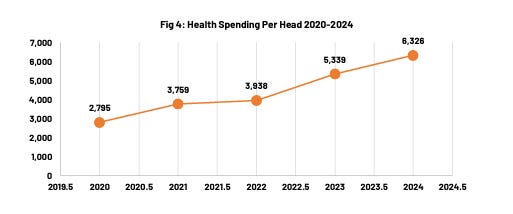
Over time, the federal government has made commitments to address healthcare issues such as the affordability of healthcare and reduction in out-of-pocket spending for all citizens, which aligns with Sustainable Development Goal 3 of Universal Health Coverage. Despite a marginal increase in healthcare expenditure per capita from ₦4,431 ($2.70) in the previous five-year average to ₦6,326 ($3.86) in 2024, only a mere 5 percent of Nigeria's 200 million population have access to some form of health coverage. This suggests that the government's allocation of resources to health may not be commensurate with the nation's needs.
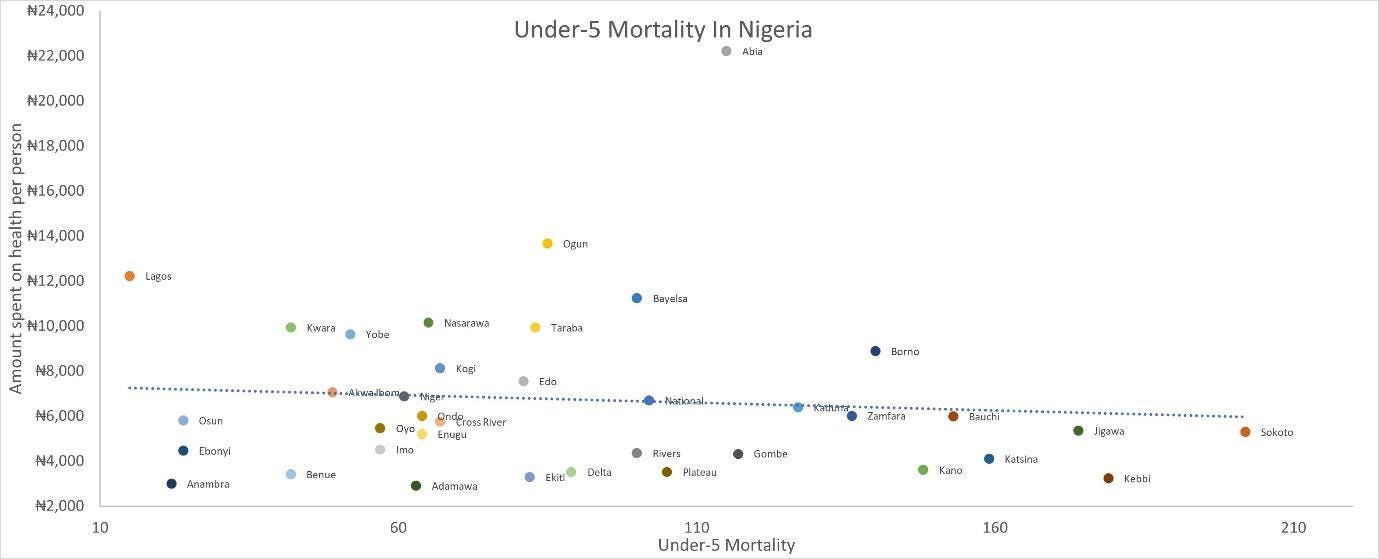
A positive correlation between healthcare expenditure per capita and reduced under-five mortality rates has been observed at the state level over the past three years. However, geographic clustering and confounding factors, such as educational status, must be carefully considered to establish a causal relationship.
More Money, Less Problems?
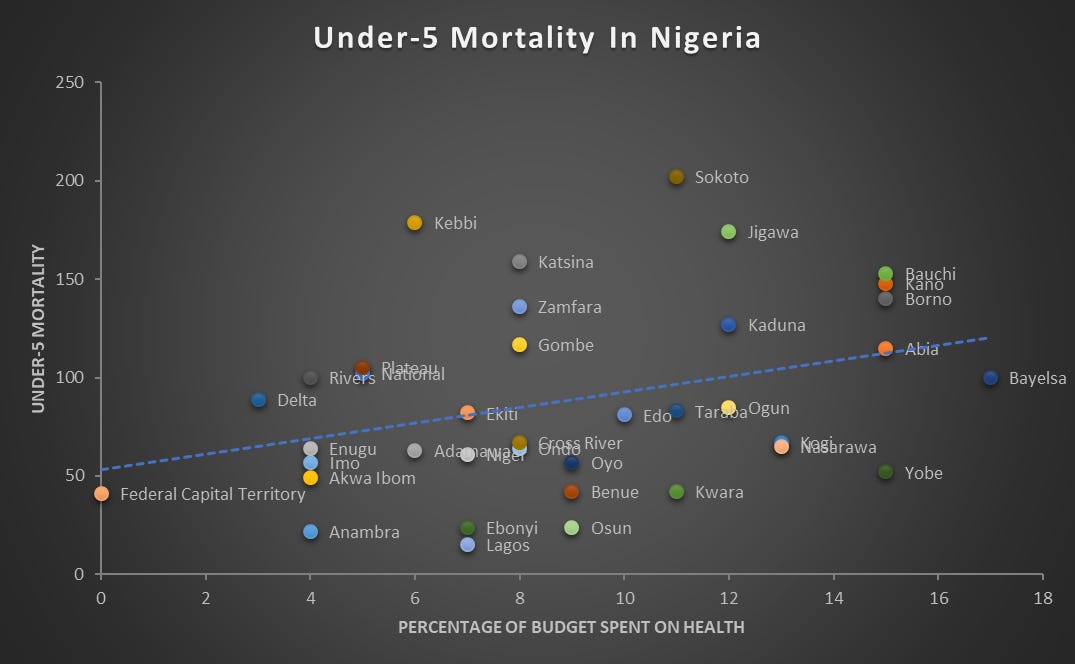
It has now been established that insufficient funding contributes to the nation's healthcare challenges. However, does spending more money equate to having better health outcomes? Typically, larger budget allocations to health result in better health outcomes, including lower maternal and infant mortality rates, higher life expectancy, and improved overall public health. Despite consistent increases in healthcare budgets over the past few years, Jigawa (98.2 percent), Sokoto (15.5 percent), Katsina (32.1 percent), and Kebbi (85.7 percent) states continue to exhibit the highest under-five mortality rates in Nigeria, as revealed by the earlier discussed 2021 Multiple Indicator Cluster Survey (MICS) conducted by the National Bureau of Statistics. This persistent challenge is rooted in a complex interplay of some factors, including socioeconomic conditions, geographic constraints, healthcare system challenges, disease burden, and inequality.
Socioeconomic factors, such as poverty, religious beliefs, and low education levels, significantly affect the health-seeking behaviours of residents of these regions, hampering the effectiveness of healthcare initiatives, regardless of the amount of money allocated.
Geographic constraints, including remoteness and inadequate infrastructure, further hinder the delivery of healthcare services. The shortage of qualified healthcare professionals, lack of essential medical equipment, and corruption within the healthcare system compound these challenges.
Additionally, the rather large socioeconomic gap within these states can exacerbate disparities in access to healthcare, with marginalized populations often bearing the brunt of the burden.
Challenges in Healthcare Budget Allocation
Nigeria navigates a complex web of issues regarding healthcare funding as its healthcare is grossly underfunded. Nigeria's annual healthcare budget for over 200 million people is ridiculously incompatible with great well-being. In context, Nigeria’s 2024 budgetary allocation to healthcare, of about $870m, is only 15 percent of Rhode Island’s (the United States smallest state in terms of land size) budgeted spending on healthcare this year.
Although Nigeria hosted her African Union counterparts in Abuja about 23 years ago to declare their government’s commitment to a 15 percent budgetary allocation to the health sector, the Nigerian government consistently defied the Abuja Declaration of 2001. Since 2010, Nigeria’s health budget has not reached half of the 2021 Abuja Declaration percentage’s commitment. The country’s largest budget percentage funding was 6.23 percent in 2012. This year, only a little over 5 percent of the annual budget goes to healthcare funding. The consistently small budgetary allocation to healthcare comes off as a lack of commitment from the government.
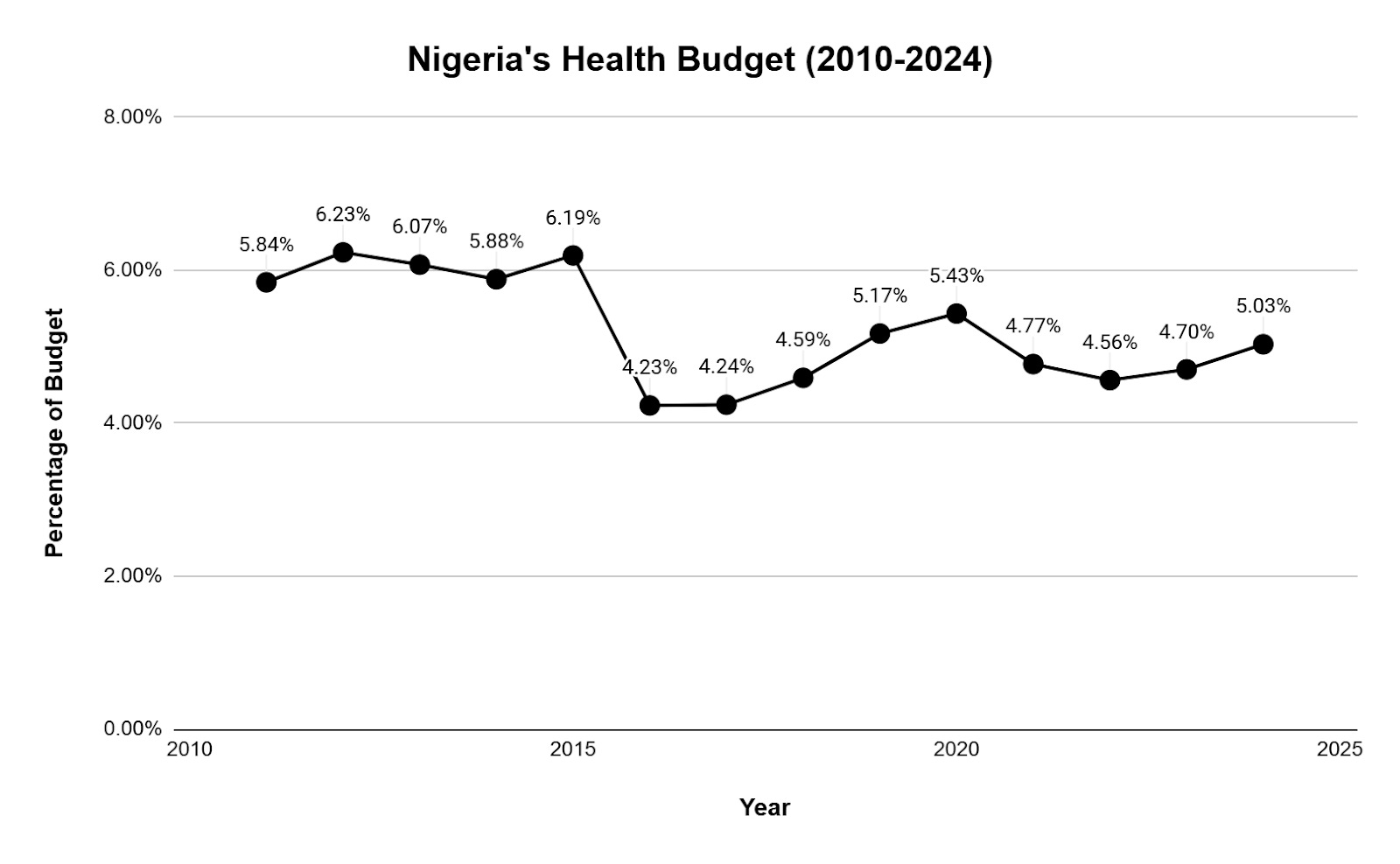
Source: Development Research and Projects Centre
The popular argument within the corridors of government that “there is not enough money,” does not usually resonate with many Nigerians. Many citizens believe the issue with healthcare funding in Nigeria is simply that of will and priority by the political leadership. The decision to spend more money on healthcare is always a tough one for a developing nation, like Nigeria, which is battling insecurity, where over $2.2 billion is earmarked for security alone this year. The security budget is three times more than the healthcare budget. However, balancing percentages of allocations to critical sectors, including healthcare, holds the key to the overall well-being of the nation and its people.
Since 2023, the political administration of Nigeria’s health sector has changed, but there seems to be no sign that the government will improve healthcare funding. Nigeria’s economy is at a crossroads and experiencing turbulent moments. It would require some discipline to look beyond the present and see the future benefits of significantly investing in healthcare.
Nigeria’s primary source of revenue is crude oil, but production continues to dwindle. The Nigerian Upstream Petroleum Regulatory Commission says oil production hovered around 1.5 million barrels daily in September. This volume is over 200,000 barrels per day short of the 1.78 million barrels per day benchmark in the 2024 budget. This fluctuation means projected revenues that fund the healthcare budget are already threatened. For sustainable, adequate funding of Nigeria’s healthcare, it is clear that there is an urgent need to look beyond the money that the government can bring to the table from its current revenue pots.
Recommendations
Public-Private Partnerships
Public-private partnerships (PPPs) are collaborative arrangements between government entities and private sector organizations aimed at funding, constructing, and managing public-benefit projects, including healthcare infrastructure and services. These partnerships capitalize on the unique strengths of both sectors to boost efficiency, widen access, and elevate the quality of services. By adopting such models, governments can attract additional investments, stimulate private sector participation in healthcare financing, and use public resources optimally, ultimately leading to enhanced healthcare delivery and improved health outcomes.
PPPs create mutual benefits for the public and private sectors and the general public. Healthcare institutions gain the opportunity to strengthen their medical teams' expertise and provide high-quality care that appeals to citizens across all income levels. They also alleviate financial and operational pressures by sharing these responsibilities with private partners, depending on the chosen PPP structure. Conversely, private sector participants gain faster market entry through public institutions with existing infrastructure, often benefiting from steady revenue flows and access to higher-income patients due to the public facilities' established patient traffic.
Scaling up health insurance for Nigerians
According to a November 2024 report by NOIPolls, only about 19 percent of adults are covered by health insurance. Alternatively, other Nigerians resort to paying out-of-pocket. The latter option is usually ineffective, inconsistent, and inadequate for caring for many health expenses. Unfortunately, the Nigerian federal government’s goals for transitioning from a voluntary health insurance scheme to a mandatory one are still largely unmet two years after implementation. The informal sector accounts for more than 65 percent of the country’s economy, and onboarding members of this sector is crucial to getting the necessary funds to provide quality care and ultimately achieve universal health coverage. As of Q4 of 2024, the director-general of the National Health Insurance Authority (NHIA), Dr. Kelechi Ohiri mentioned that only 1 percent of the informal sector is captured under the mandatory health scheme. This poor percentage uptake sharply contrasts with about 62 percent of the formal public and private sectors covered by the NHIA.
Capturing at least 50 percent of the informal sector in the mandatory insurance policy can make more money available to fund healthcare, thereby easing pressure on other healthcare funding sources, like the Basic Health Care Provision Fund. To achieve this, state health insurance agencies must be empowered to play their pivotal roles; state governments must financially support their insurance agencies and make counterpart funding available. At the same time, the NHIA must actively and consistently engage with stakeholders, including state health ministries, the Nigeria Governors’ Forum, labour union leaders, informal sector leaders, civil society organizations, and the media to improve the number of those captured within the insurance scheme.
Conclusion
In conclusion, addressing the challenges facing Nigeria's healthcare system requires a comprehensive and sustained effort. While the correlation between budget allocation and health outcomes highlights the importance of increased funding, it also underscores the need for efficient resource utilisation. The persistent shortfall in meeting the Abuja Declaration's 15 percent target for healthcare spending has hampered the nation's ability to provide equitable, quality healthcare for its population.
Leveraging public-private partnerships and expanding health insurance coverage offers practical pathways to bridge funding gaps and improve access. These approaches can empower the healthcare sector to deliver better outcomes, particularly in underserved regions with formidable socioeconomic and infrastructural barriers. By adopting innovative solutions and fostering collaboration among stakeholders, Nigeria can gradually overcome its healthcare challenges and build a system capable of meeting the diverse needs of its people, ensuring a healthier future for all.
Dr. David Adetula is a dentist and public health professional with special interests in achieving innovative health systems for equitable, accessible, and universal healthcare delivery. He is the Executive Director of the Public Health Interest Group Africa (PHIGA) and he serves as a co-lead for the health policy and management subgroup of PHIGA. David also interns with the American Committee on Clinical Tropical Medicine and Travelers' Health (ACCTMTH – “Clinical Group”), ASTMH.
Miracle Agbontale is a final-year Physiotherapy student at the College of Medicine, University of Ibadan, with a deep passion for transforming healthcare through innovation and strategic leadership. Her interests lie at the intersection of healthcare operations, management, and global health, where she seeks to drive impactful change in the delivery and accessibility of care. She is the Deputy Executive Director of the Public Health Interest Group Africa (PHIGA) and co-leads PHIGA's Health Policy and Management sub-group.
Oreoluwa Odutoye, a passionate medical student at Bowen University, thrives at the intersection of medicine, finance, and storytelling. Driven by a deep-seated desire to champion equitable and sustainable healthcare access for all, he believes in bridging these diverse disciplines through research, advocacy, and awareness initiatives. He is the former Vice President External of the Nigerian Medical Students Association (NiMSA).
 | A guest post by
|
 | A guest post by
|